
Navigating the Cosmos: Comparing Astronomy Learning Approaches to Suit Your Unique Curiosity
Explore different methods to learn astronomy and how to select the best approach based on your interests, background, and goals in scientific exploration.
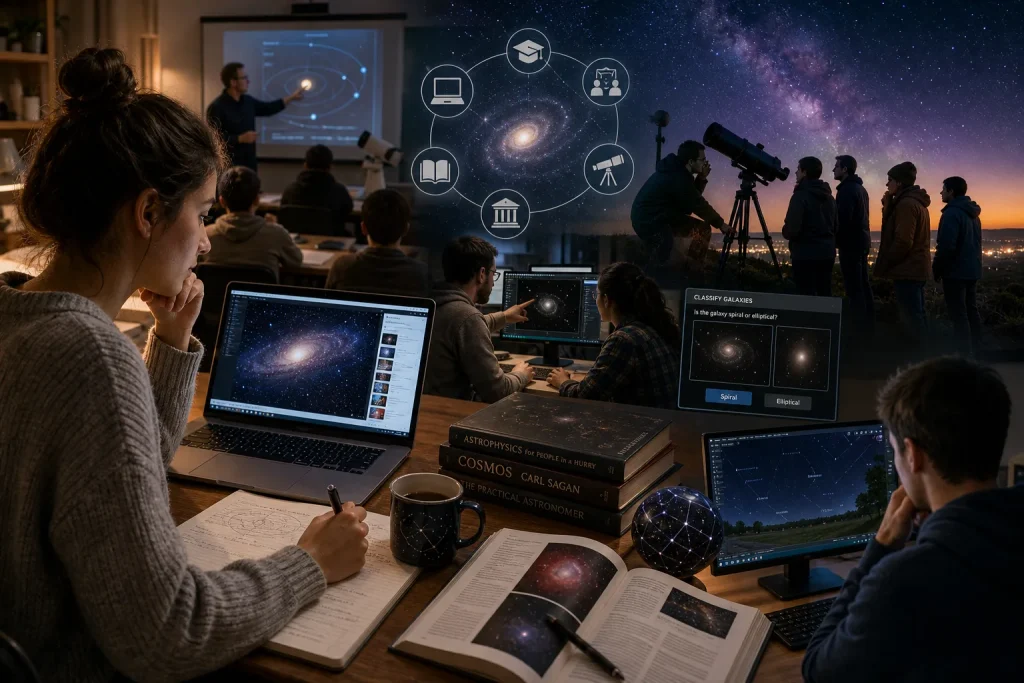
Astronomy, the study of celestial objects and phenomena beyond Earth’s atmosphere, captivates the imaginations of many. Whether driven by a casual curiosity about stars or a serious desire to contribute to scientific discovery, selecting the right learning approach is crucial. Different educational methods cater to diverse learner needs, backgrounds, and goals within the expansive universe of astronomy. This article compares major astronomy learning approaches and guides readers to choose the most fitting path to deepen their understanding of the cosmos.
Traditional Classroom Learning: Structured Foundations in Astronomy
Classroom courses, either at high schools, universities, or community colleges, provide a structured and comprehensive pathway into astronomy. Students benefit from curated curricula designed to introduce foundational concepts such as celestial mechanics, astrophysics, and observational techniques, often supported by laboratory exercises or planetarium visits. This approach suits those seeking formal credentials or intending to pursue scientific careers.
Additionally, instructors facilitate deeper engagement through discussions, guided projects, and assessments, which help solidify understanding. However, traditional learning requires adherence to schedules and locations, which may not suit everyone’s lifestyle or learning pace. The cost and accessibility of formal institutions also vary widely, potentially limiting this option for some learners.
Online Courses and MOOCs: Flexible and Accessible Astronomy Education
The rise of Massive Open Online Courses (MOOCs) and dedicated astronomy platforms offer flexible self-paced learning from the comfort of home. Platforms like Coursera, edX, and specialized providers expose learners to university-level content through video lectures, quizzes, and interactive simulations. This format serves well independent learners who seek to balance education with other commitments.
One advantage is the immediate global access to expert-led astronomy courses, often at low or no cost. However, the onus is on the learner to maintain motivation and to integrate knowledge without instructor interaction or hands-on practice. Supplementing online learning with real-world observation or community engagement enhances comprehension.
Citizen Science and Amateur Astronomy: Experiential Exploration
Active participation in citizen science projects and amateur astronomy clubs allows learners to engage directly with data collection and analysis. For example, monitoring variable stars, tracking meteors, or contributing to galaxy classification databases merges practical experience with scientific contribution. This approach appeals to those who learn best through doing and prefer a social or collaborative context.
Amateur observatories and star parties provide opportunities for hands-on telescope use and mentorship. While this method fosters enthusiasm and practical skills, it may lack in-depth theoretical coverage unless paired with formal or self-directed study. Consideration of equipment costs and weather conditions is also necessary.
Informal Learning: Books, Documentaries, and Podcasts
Many astronomy enthusiasts begin or enrich their exploration through informal resources such as popular science books, documentaries, podcasts, and astronomy magazines. These mediums are excellent for broadening general awareness, stimulating interest, and staying updated on discoveries. They are accessible to all ages and require minimal investment.
Although informal learning often omits rigorous training and may simplify complex topics, it is invaluable for lifelong learners or those testing their interest before committing further. Choosing materials by reputable authors and institutions ensures accuracy and depth.
Using Simulations and Virtual Planetariums: Interactive Digital Experiences
Advanced software simulations and virtual planetariums offer immersive ways to visualize and experiment with celestial phenomena. Programs like Stellarium, Celestia, or NASA’s Eyes allow users to explore the night sky, simulate orbits, and understand spatial relationships interactively. This approach suits visual learners and those unable to access dark skies or telescopes.
These tools encourage curiosity and immediate experimentation, reinforcing concepts such as star movement or eclipse prediction. However, they require access to capable devices and some technical literacy. Incorporating them into study routines can greatly enhance conceptual comprehension and engagement.
Facilitated Workshops and Observatories: Guided Hands-On Learning
Hands-on workshops at science centers, museums, or observatories combine expert guidance with practical experience. Such programs can include night-time telescope sessions, astrophotography classes, or themed lectures. They cater well to learners who thrive in social environments and benefit from direct mentorship.
The immediate feedback, group discussions, and curated experiences deepen understanding and motivation. Although workshops may be episodic and constrained by location, they often inspire continued astronomy engagement and can supplement other learning approaches effectively.
Conclusion: Tailoring Your Astronomy Learning Journey
Choosing the right approach to learning astronomy depends on your goals, resources, and preferred learning style. Formal education builds a solid theoretical foundation, whereas online courses offer flexible access to expert content. Hands-on involvement through citizen science or workshops suits experiential learners, while informal media support casual exploration. Digital simulations bridge gaps in accessibility and visualization.
Hypothetical Worked Example: Imagine a working professional with a full-time job who wants to deepen knowledge of astronomy without formal study. They start with free online courses from a reputable university to build basic theory. To supplement this, they join a local amateur astronomy club to attend monthly star-gazing nights and practice using telescopes. On weekends, they use Stellarium software to plan observations and visualize phenomena. This blended approach balances theoretical learning, practical experience, and flexible scheduling, maximizing their growth while fitting their lifestyle.
- Assess your time availability and learning goals before choosing an approach.
- Leverage free or low-cost online courses to build foundational knowledge.
- Complement theoretical study with hands-on astronomy through clubs or observatories.
- Use digital simulations to practice and visualize concepts anytime.
- Engage with informal resources like books and podcasts to maintain motivation and curiosity.
Ultimately, a personalized mix of these options allows every enthusiast to navigate the cosmos in a way that is meaningful, manageable, and inspiring.