
Navigating Biology Education: Common Mistakes and a Careful Decision Checklist
Explore common errors in biology education and a detailed checklist to make informed decisions for teaching and learning success.
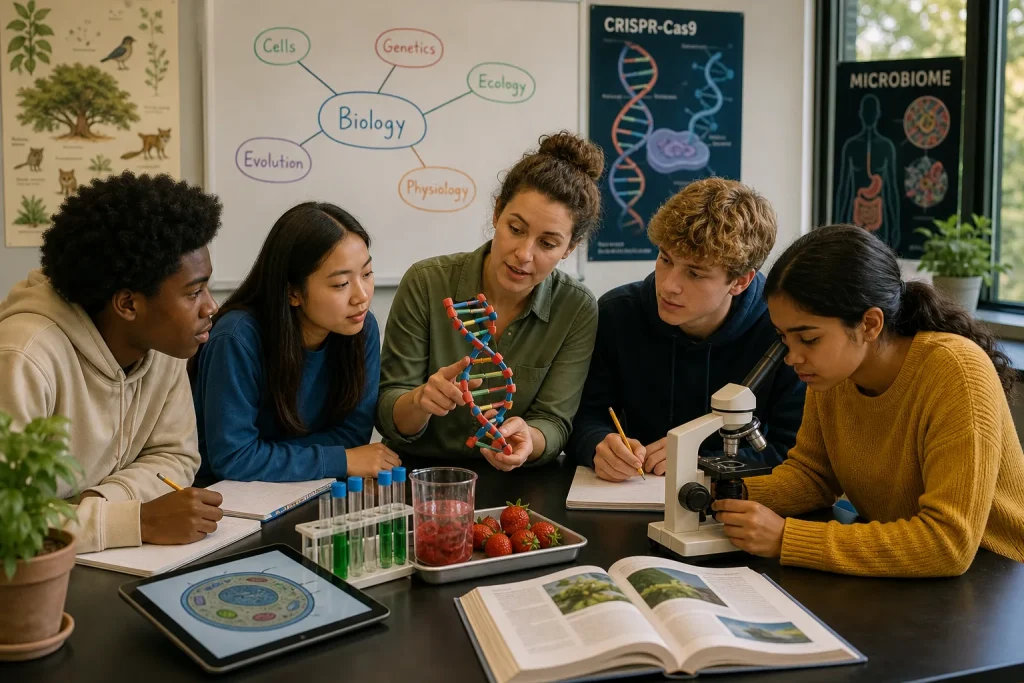
Biology, the study of life and living organisms, is a cornerstone of science education, offering students profound insights into the natural world. However, educators and learners often encounter frequent pitfalls that impede comprehension and enthusiasm. Addressing these common mistakes with a practical decision checklist can enhance biology education and foster deeper exploration.
Underestimating Concept Interconnections
One frequent error in biology education is treating concepts as isolated facts rather than connected systems. For example, teaching genetics without linking it to cellular biology or ecology can fragment understanding. Concepts like evolution, physiology, and molecular biology interplay dynamically, and ignoring these relationships diminishes the richness of learning.
Educators should emphasize interconnections to build a holistic perspective. This approach encourages critical thinking as students appreciate how biological processes influence each other, which is vital for advanced studies or research. Embracing integrated teaching materials and cross-topic discussions can reduce this common oversight effectively.
Oversimplification Leading to Misconceptions
In an attempt to make biology accessible, oversimplification can inadvertently create misconceptions. For instance, stating that “DNA is the blueprint of life” without elaborating on gene regulation and environmental factors might cause students to misunderstand the complexity of genetic expression. Simplifying concepts is necessary, but it must be balanced with accuracy.
To avoid this, educators should identify key complexities relevant to their audience and provide clear context. Using analogies cautiously and supplementing lessons with real-world examples can clarify concepts without diluting scientific accuracy. This ensures learners build a realistic understanding rather than superficial knowledge.
Neglecting Practical and Experimental Learning
Another common mistake is focusing predominantly on theoretical knowledge at the expense of hands-on experiences. Biology is an empirical science where experiments and observations are essential for comprehension and curiosity development. Relying solely on textbooks limits engagement and the ability to translate theory into practice.
Incorporating laboratory activities, fieldwork, and interactive simulations helps students internalize concepts more deeply. These experiences cultivate analytical and problem-solving skills critical in biology. Education programs should allocate sufficient time and resources for experimental learning to complement theoretical instruction.
Ignoring Student Diversity and Learning Styles
Biology instructors sometimes assume a uniform learning style, overlooking how diverse student backgrounds and preferences affect assimilation. Some learners grasp material better visually, others through reading or kinesthetic activities. Ignoring this diversity risks leaving segments of students behind and dampening enthusiasm.
Adapting instructional strategies to cater to multiple learning styles — such as combining lectures with videos, diagrams, group discussions, and hands-on tasks — improves accessibility. Moreover, contextualizing biology in culturally relevant ways enhances relevance and motivation, cultivating inclusive classrooms that support all learners.
Overreliance on Memorization
Excessive emphasis on rote memorization remains a widespread issue in biology education. Students may memorize terminology or processes for exams without true comprehension, leading to difficulties applying knowledge in novel contexts. This approach undermines deeper learning objectives like analysis and synthesis.
To counter this, educators should promote active learning strategies such as concept mapping, peer teaching, and problem-based learning. Encouraging students to connect concepts, ask questions, and predict outcomes moves biology education beyond memorization toward meaningful understanding.
Failing to Update Content with Current Scientific Advances
Biology is a rapidly evolving field, with constant discoveries changing understanding. Sticking to outdated content can misinform students and lessen enthusiasm for the subject. Topics like CRISPR gene editing, microbiome research, and climate change impacts are critical for contemporary biology education.
Educators and curriculum developers must regularly review and integrate cutting-edge science into teaching materials. Including recent case studies, research highlights, and ethical discussions promotes relevance and prepares students for modern biological challenges and careers.
Decision Checklist for Effective Biology Education
- Ensure concept integration: Are lessons designed to show connections between biological topics?
- Balance simplification with accuracy: Is the content understandable without distorting scientific facts?
- Incorporate hands-on learning: Are practical experiments and observations included?
- Address diverse learning styles: Do teaching methods cater to different student preferences?
- Promote critical thinking over memorization: Are active learning techniques employed?
- Update curriculum regularly: Is recent biological research and discoveries integrated?
Hypothetical Worked Example
Imagine a high school biology teacher planning a unit on genetics. Initially, the teacher intends to lecture with textbook readings and quizzes focused on memorizing terms like “allele” and “homozygous.” Applying the checklist, the teacher revises the plan:
- Introduces the topic by connecting genetics to cell biology and evolution.
- Uses clear but precise explanations, avoiding oversimplified slogans.
- Plans laboratory activity extracting DNA from strawberries to provide hands-on experience.
- Includes videos, diagrams, group discussions, and physical models to accommodate varied learning styles.
- Incorporates problem-solving tasks where students predict inheritance patterns rather than memorize alone.
- Integrates discussion of CRISPR technology and recent genetic research as contemporary context.
This comprehensive approach is expected to enhance student engagement, deepen understanding, and prepare learners for future biological studies.
Conclusion
Effective biology education demands careful attention to common pitfalls and intentional strategies for improvement. Avoiding fragmentation, oversimplification, and rote learning while embracing practical work, diverse methods, and up-to-date science forms the foundation of quality teaching. By applying a structured decision checklist, educators and learners can navigate biology education thoughtfully, unlocking the full potential of exploring life’s complexities.